
Beginner's guide to Tuning a Guitar
From clueless to... not as clueless
You start playing your guitar, confidently fret a D-chord and strum with your pick. ouff, something sounds off. You look and your left hand and everything looks correct, but there's still something wrong. If this is the case your tuning might be off.
Learning how to tune a guitar is one of the first challenges a beginner faces when learning to play.
Using this guide will help you learn how to tune any guitar (with or without a tuner), identify guitar string notes, and keep your guitar in tune longer. Regular practice is essential to learning an instrument and being in tune makes practice much more fun and rewarding.
Guitar Tuning 101
Let’s start with some of the basics of how to tune a guitar. Guitar tuning is controlled by the tuning pegs on the headstock of the guitar. Turning the pegs changes the pitch of the strings up or down. Tightening the strings makes the pitch go up; loosening the strings makes the pitch go down.

Finding Guitar string notes: EADGBe
The guitar has 6 strings. Listed from low to high, or thickest to thinnest string, the guitar string notes are: E, A, D, G, B, e.
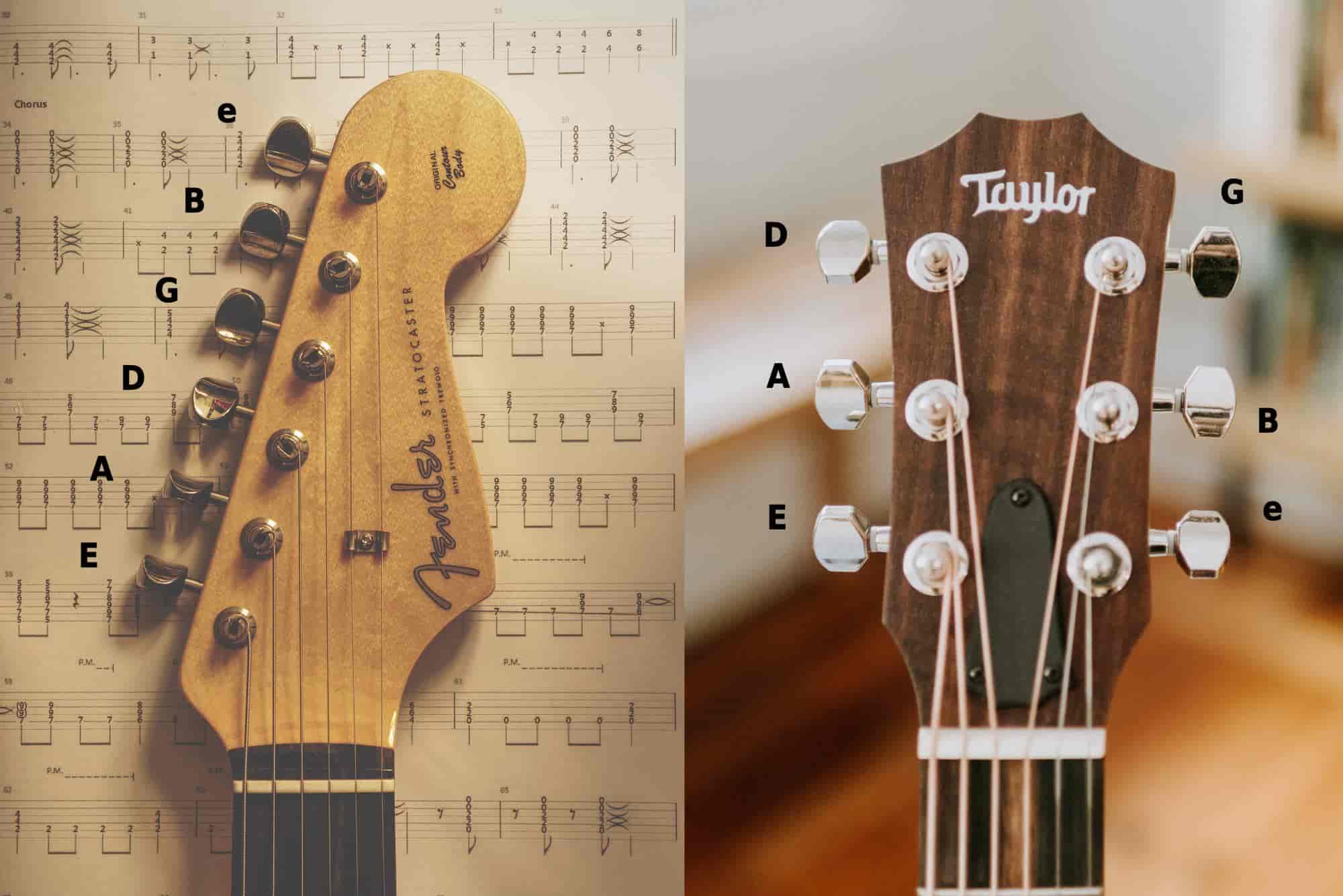
This is called standard tuning for guitar and they make certain kinds of chords easier to play. There are many different types of tunings for guitar, which we will talk about in a later post. For now we will just accept this tuning and try to remember it as well as we can. You'll soon get it!
The keen eyed will notice that there are two E's in this tuning system, but one written in lowercase. This is only to emphasize that they are different octaves even though they are the same note. You can read more about octaves and other intervals in a later post.
How often should you tune your guitar?
There's many factors that can affect the tuning of your guitar. This ranges from the obvious culprits such as leaning your guitar against something or putting it in a gig bag. Playing really hard, newly changed strings, bending strings and most whammy bars are all things that will affect your tuning. Also your guitar is most likely made out of wood and this means that even changes temperature and humidity will affect the tuning of your guitar.
You should tune your guitar every time you play it. Sometimes even multiple times in the same session depending on what you do. Not only is this great for everyone that listens to you playing, but also because it will help you connect the sounds of your guitar to the movements of your hand and where you play the notes. If the sounds always are the same, your brain will have an easier time remembering the correct sounds.
How to tune your guitar without a tuner
If you’re wondering how to tune a guitar without a tuner, you’re not alone. Many musicians may find themselves in need of tuning their guitar without a tuner on the fly or if they’re traveling.
Fortunately, there are hundreds of tuner apps available for mobile devices, and many are even free. These apps use the built in microphone in your device to hear the pitch of the strings, making this an easy way to tune your guitar. As you adjust the pitch of the strings the display on your device tells you when you are in tune.
You can also tune using a reference pitch from another instrument like a piano or another guitar that you know is in tune.
This is a little more difficult as you have to tune one of your strings to the reference pitch “by ear”. This involves listening to the reference pitch, playing the same note on the guitar and comparing the pitches. Adjust your note to match the reference pitch. Once you have one string in tune, you can then tune the rest of the guitar string notes by playing a fretted note on a lower string and then tuning your open string to that note.
Want to learn all the notes of the guitar?
Check out our Fretboard App. Over there you can learn all notes individually and many different chords, even if you don't have your guitar. Repetition is your friend when learning guitar and with our app you can practice the notes anywhere!